Created using still images taken by the Cassini spacecraft during it’s flyby of Jupiter and while at Saturn. Shown is Io and Europa over Jupiter’s Great Red Spot.
A multitude of magnificent, swirling clouds in Jupiter’s dynamic North North Temperate Belt is captured in this image from NASA’s Juno spacecraft [1742 x 1742] by RyanSmith
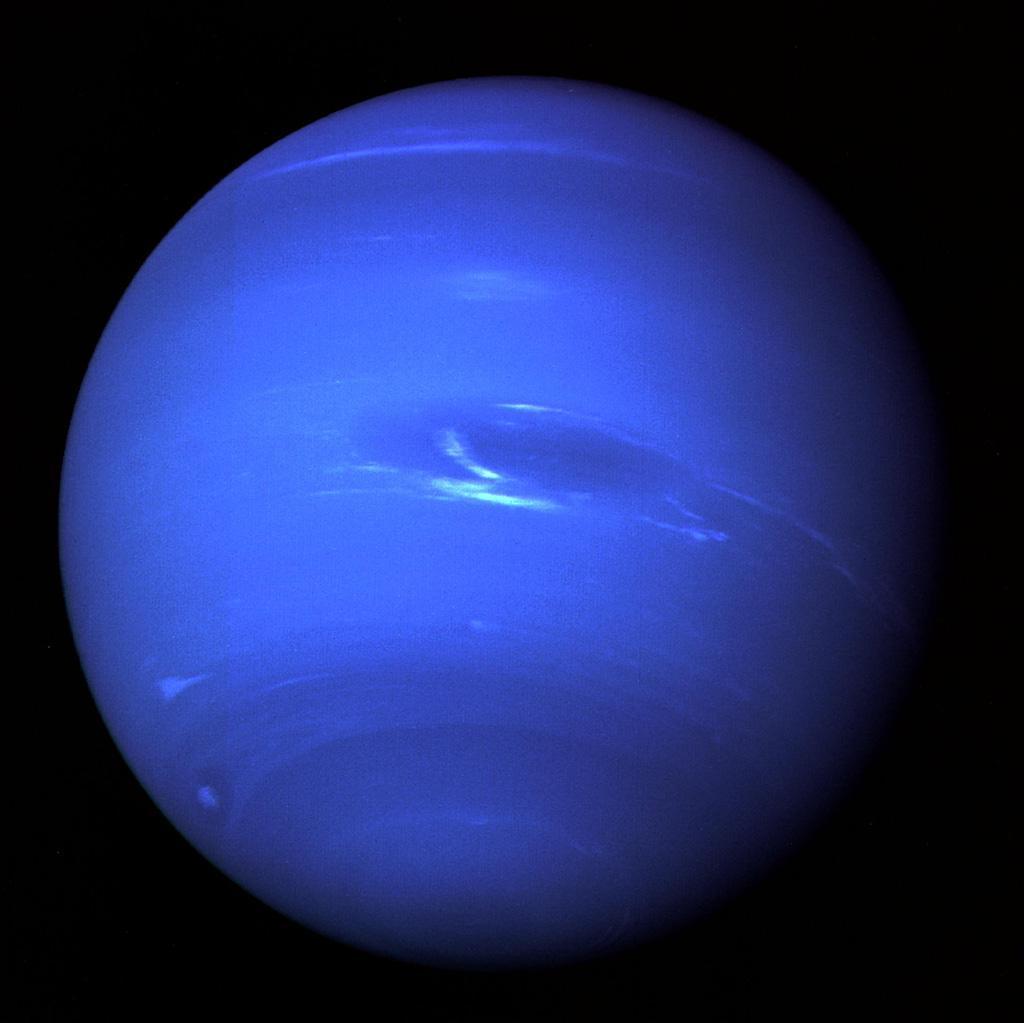
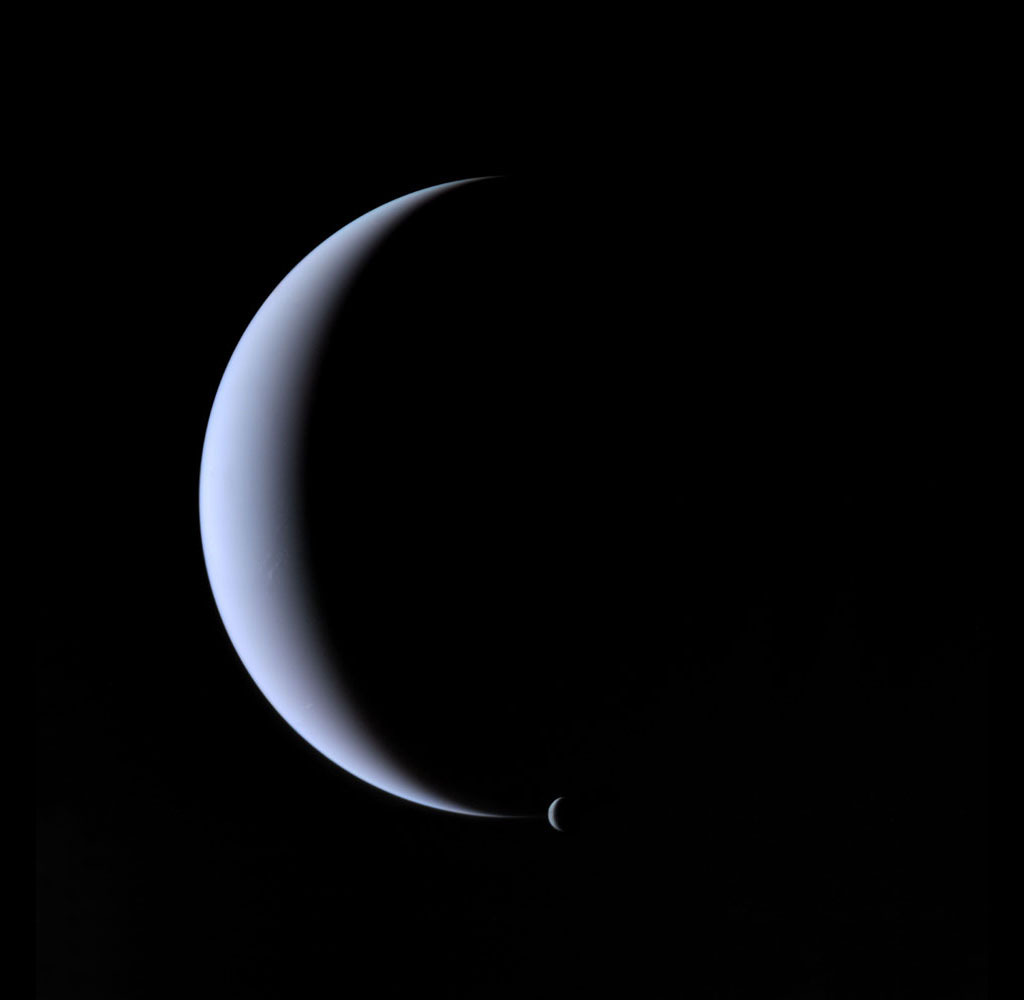
This picture of Neptune was produced from the last whole planet images taken through the green and orange filters on NASA’s Voyager 2 narrow angle camera. The images were taken at a range of 4.4 million miles from the planet, 4 days and 20 hours before closest approach.
During August 16 and 17, 1989, the Voyager 2 narrow-angle camera was used to photograph Neptune almost continuously, recording approximately two and one-half rotations of the planet.
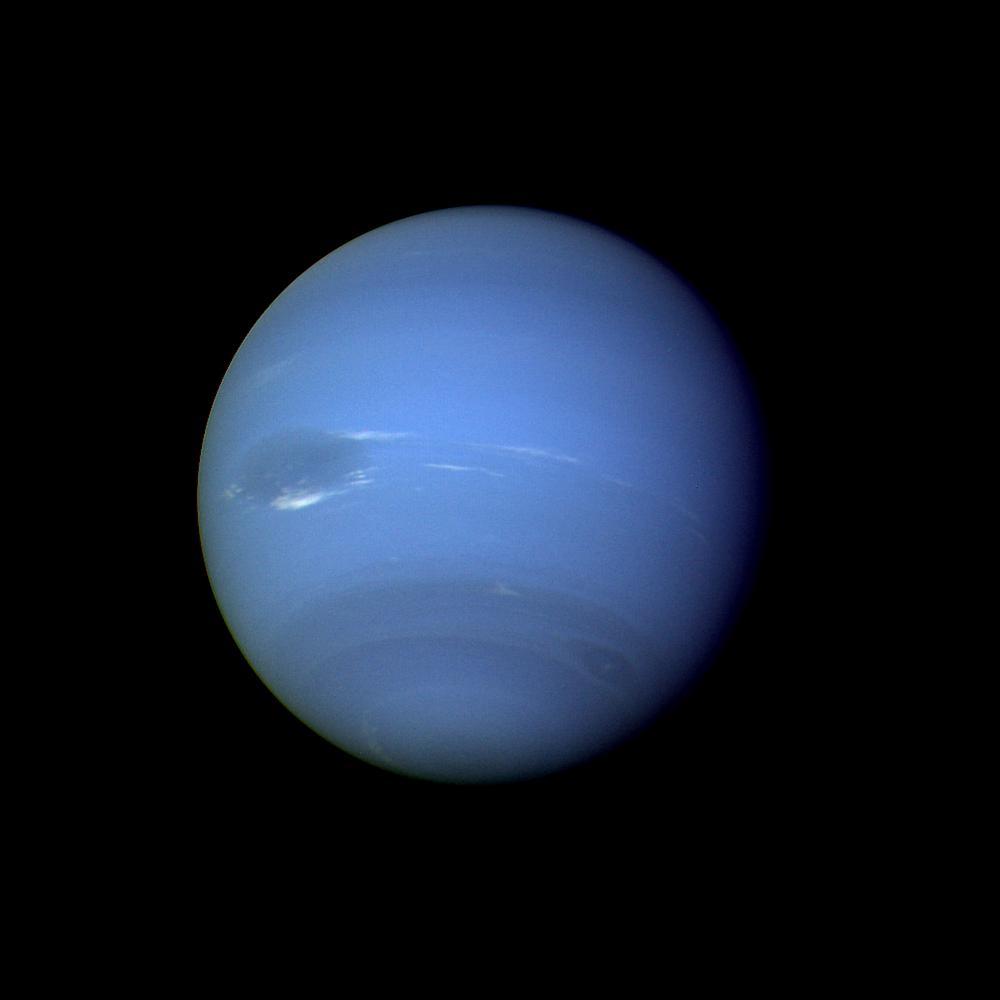
Assembled using orange, green, and blue filtered images taken by Voyager 2 on August 24 1989.
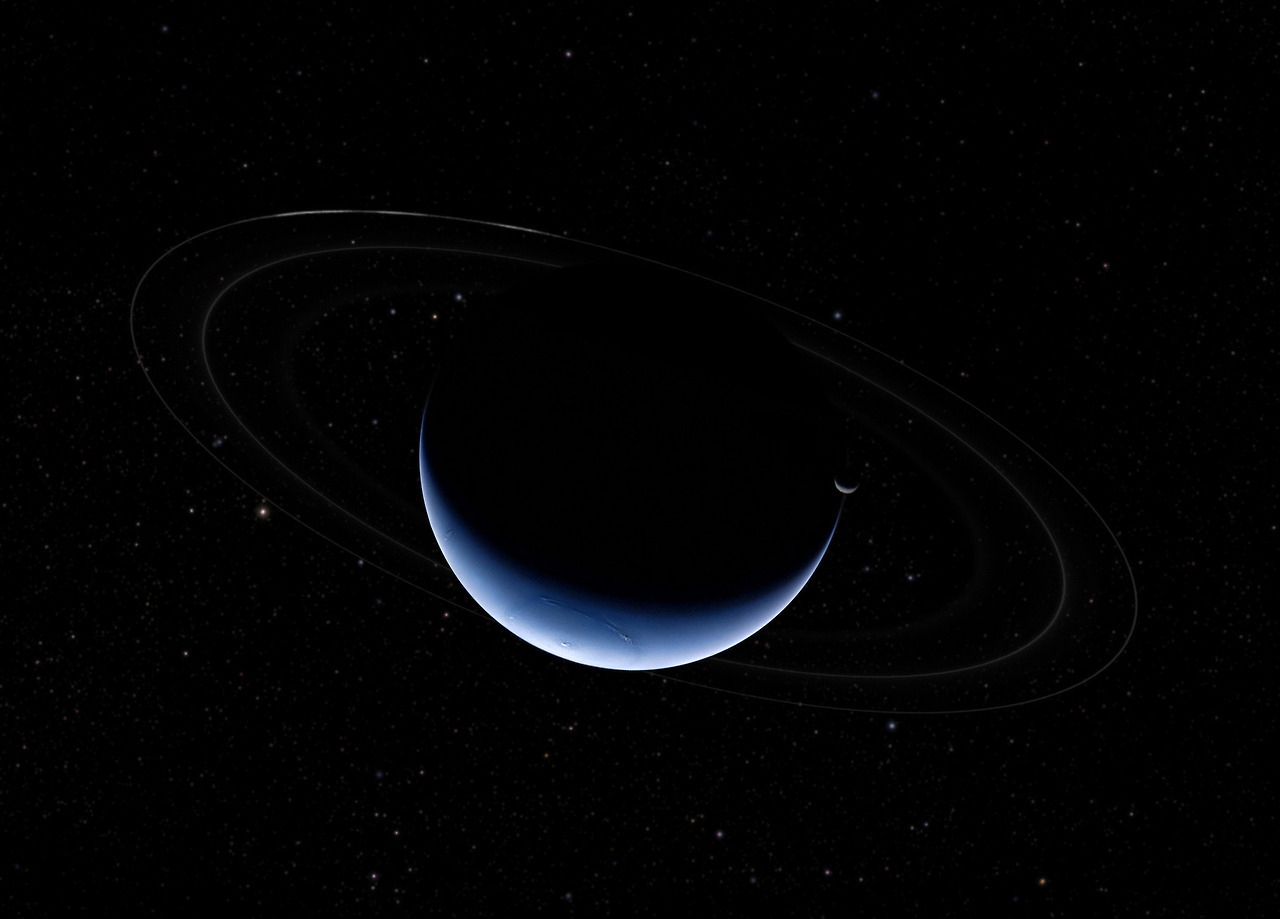
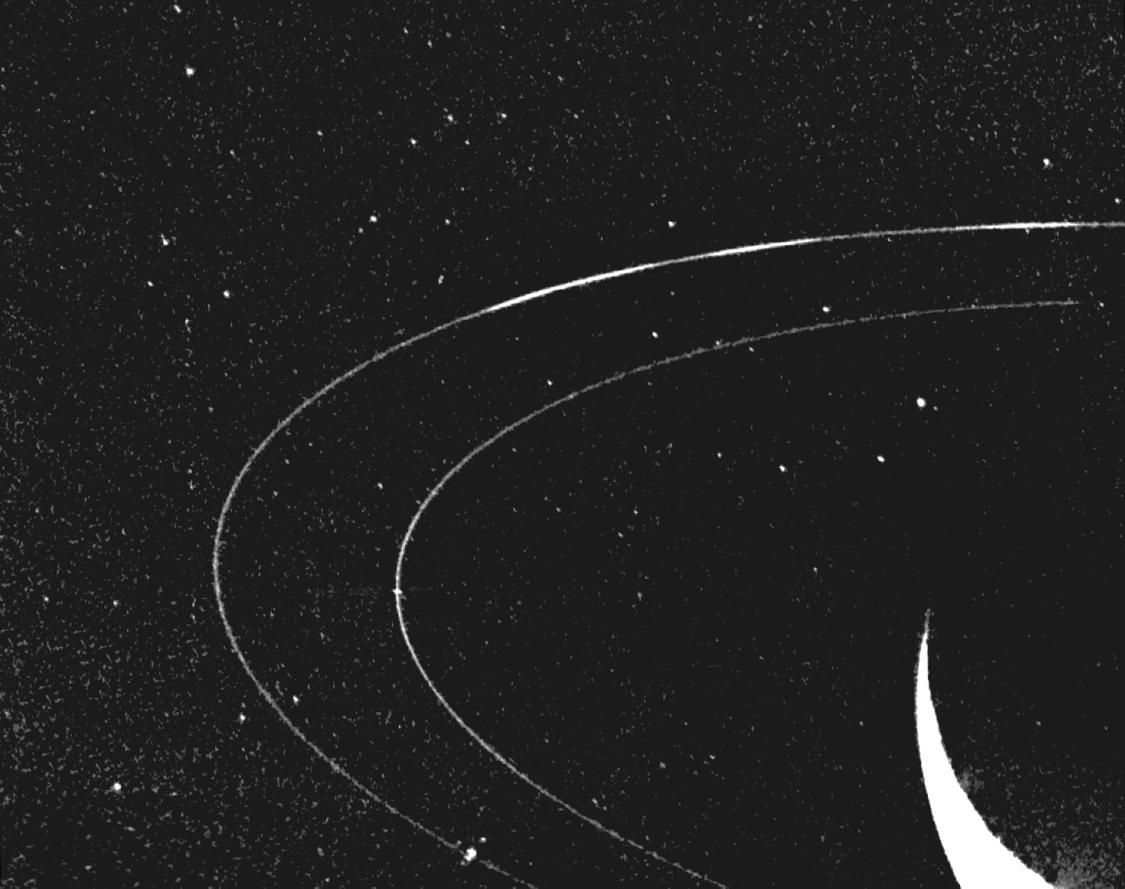
Based on the images recorded during its close encounter and in the following days, this inspired composited scene covers the dim outer planet, largest moon Triton, and faint system of rings.
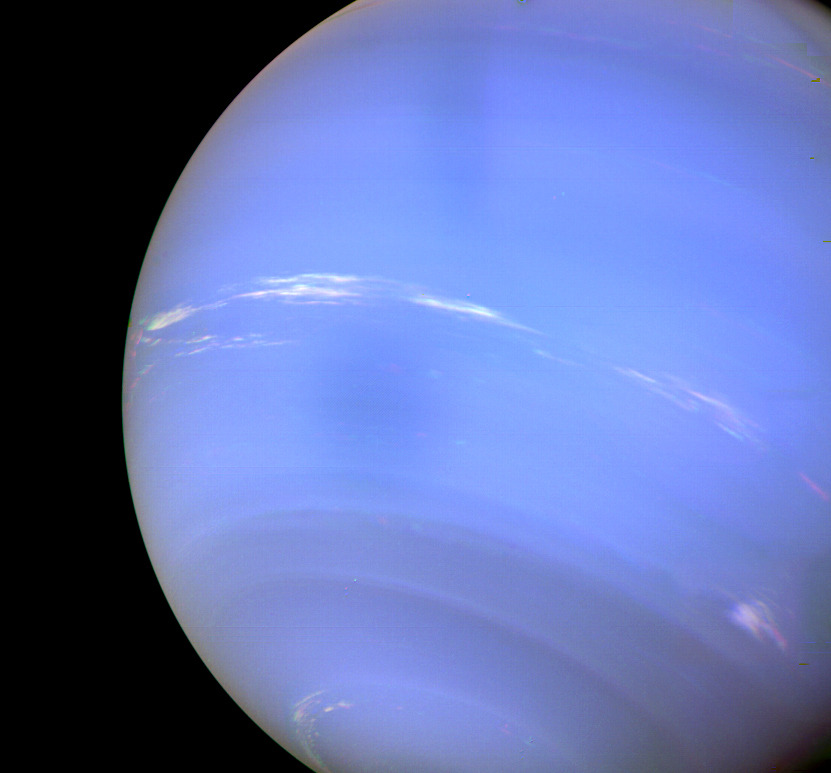
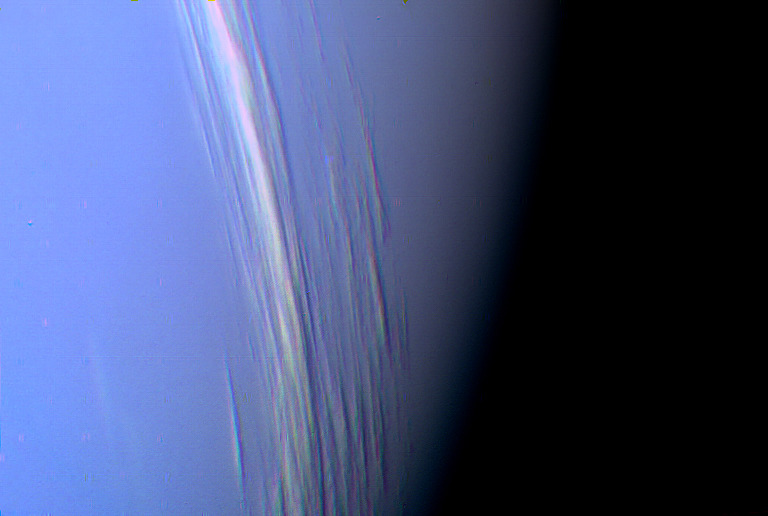
NASA’s Voyager 2 high resolution color image, taken 2 hours before closest approach, provides obvious evidence of vertical relief in Neptune’s bright cloud streaks. These clouds were observed at a latitude of 29 degrees north near Neptune’s east terminator.
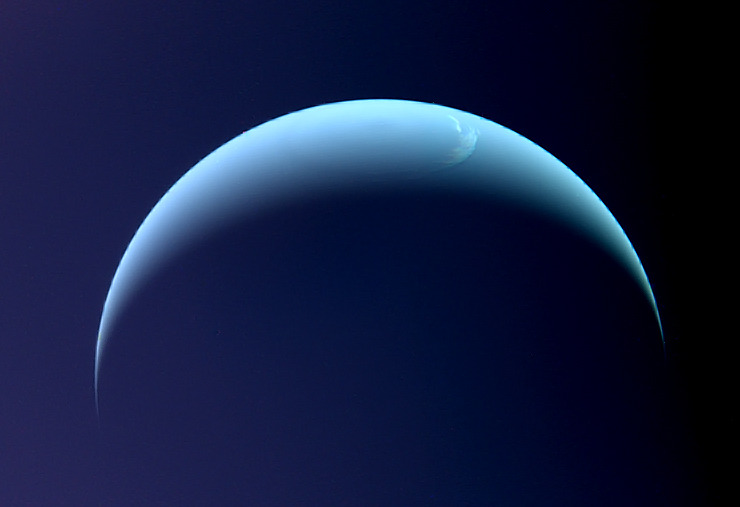
Assembled using orange, green, and blue filtered images taken by Voyager 2 on August 31 1989.
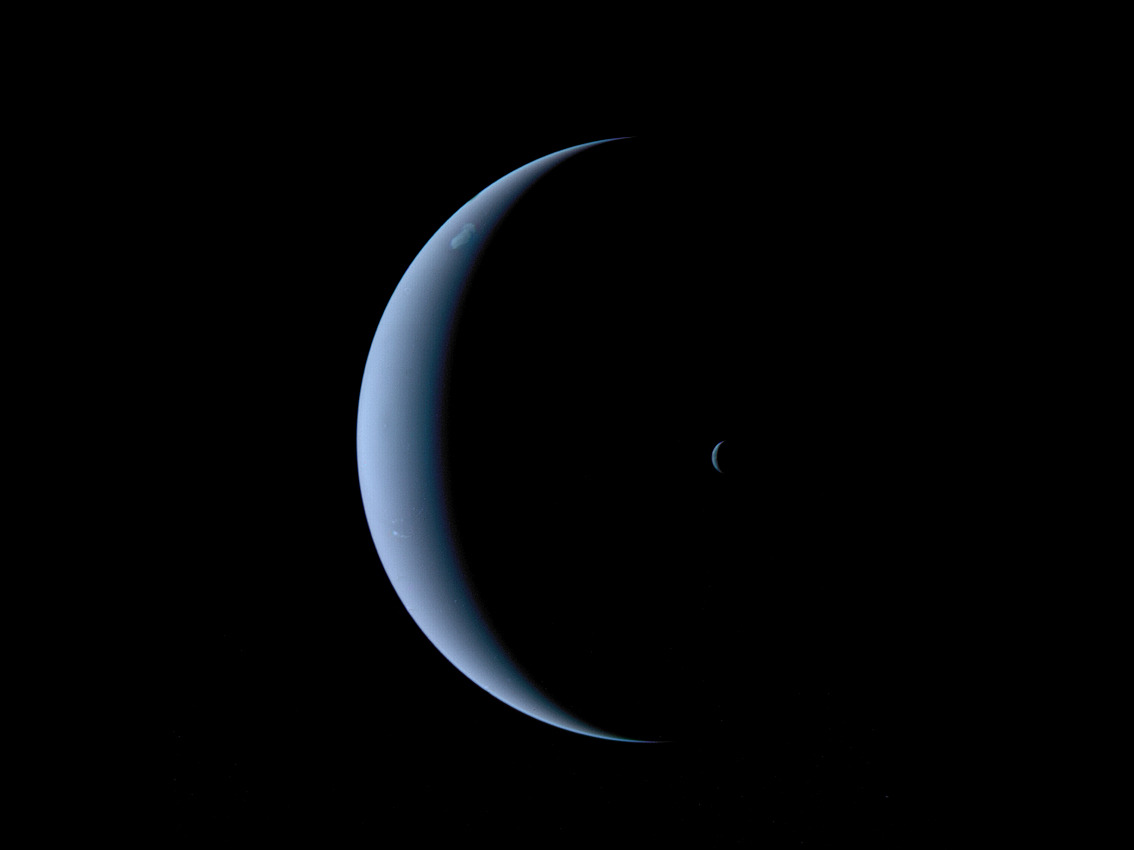
Neptune and triton captured by Voyager 2 on their way out of the solar system in August 1989.
Neptune and triton captured by Voyager 2 on their way out of the solar system in August 1989.
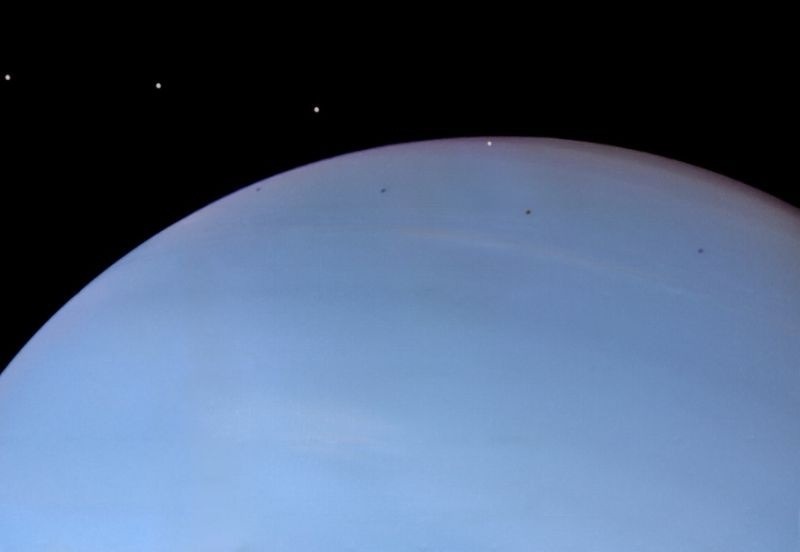
This view of Despina eclipsing and transiting Neptune is composed of four frames captured nine minutes apart on August 24, 1989 from 20:00 to 20:27 through blue, orange, violet, and green filters. In this version, Despina has been brighted substantially to make it easier to spot.
This crescent view of the outermost planet and its moon is one of the last images recorded by Voyager 2’s cameras as it sped onwards to interstellar space, having surveyed most of the outer Solar System.
Arcs in the Adams ring (left to right: Fraternité, Égalité, Liberté), plus the Le Verrier ring on the inside
After nine years in deep space collecting data that indicate our sky to be filled with billions of hidden planets – more planets even than stars – NASA’s Kepler space telescope has run out of fuel needed for further science operations. NASA has decided to retire the spacecraft within its current, safe orbit, away from Earth. Kepler leaves a legacy of more than 2,600 planet discoveries from outside our solar system, many of which could be promising places for life.
“As NASA’s first planet-hunting mission, Kepler has wildly exceeded all our expectations and paved the way for our exploration and search for life in the solar system and beyond,” said Thomas Zurbuchen, associate administrator of NASA’s Science Mission Directorate in Washington. “Not only did it show us how many planets could be out there, it sparked an entirely new and robust field of research that has taken the science community by storm. Its discoveries have shed a new light on our place in the universe, and illuminated the tantalizing mysteries and possibilities among the stars.”
Remember Rosetta? That comet-chasing European Space Agency (ESA) probe that deployed (and accidentally bounced) its lander Philae on the surface of Comet 67P? This GIF is made up of images Rosetta beamed back to Earth, which have been freely available online for a while. But it took Twitter user landru79 processing and assembling them into this short, looped clip to reveal the drama they contained.
while the stuff in the foreground is dust/ice on the surface of the comet itself, the background is actually stars. i saw a stabilized video where you can really make it out, and it blew my mind.
here’s the stabilized clip, if anyone’s interested




 wrennette