. It’s related to JudasHey everyone, Abby here! Seeing as today is the famous “Friday the 13th”, I wanted to post something that would go a bit with the theme: superstitions and how to make them. Let’s jump right in!
What is a superstition?
According to Merriam-Webster, a superstition is “a belief or practice resulting from ignorance, fear of the unknown, trust in magic or chance, or a false conception of causation”. Essentially, it’s everything you’ve ever heard about mirrors and black cats.
Here is a short list of common superstitions in the modern world:
the number 13
black cats
breaking a mirror
walking under a ladder
throwing salt over your shoulder
opening an umbrella inside
And those are just a few. You’ve likely heard of at least one of these, especially from your most superstitious friends. Usually they have to do with luck or fate, or sometimes even religion.
Do I need superstitions in my world?
Nope! But if you’re currently in the world-building phase and you feel like it could use a little more depth, superstitions might be helpful. They could also be used as symbolism throughout the story.
How would I create a superstition?
Well, they can honestly be born from pretty much anything. All it takes is an idea and a backstory, and from there you can pick and choose which characters believe in it. Backstories are seriously important in creating your superstition as they’ll probably play a role in who really believes in them. Here are a few quick examples of superstitions’ backstories.
the number 13. This one is of Catholic origin. Judas Iscariot, the disciple who betrayed Jesus in the Bible, was 13th to sit at the table during the Last Supper.
black cats. Black cats are associated with many things, but the most notable origin I could find was the Middle Ages. “Normans and Germanic people believed that, like the black raven, a black cat was a sign that a death would soon occur.” (x)
breaking a mirror. Common thought is that any superstition involving a mirror came to be when early humans first saw their reflections in a pool of water. They may have believed that the image was actually their soul rather than their reflection and causing it any sort of harm would risk injury to the actual person.
There’s a lot of history in superstition. When creating yours, think of the logic used at the time. What did the people believe, and what were they most afraid of? Use questions like these in creating yours.
So, that’s all I’ve got for today! If there’s anything you want to see me talk about in my next post, please don’t hesitate to leave a message in my ask! UNtil next time, much love! <333
Never know when you’ll need a superstition in your writing. Not just today.
Big Horses are a Very New Thing and they Likely Didn’t Exist in your Historical and/or Fantasy Settings.
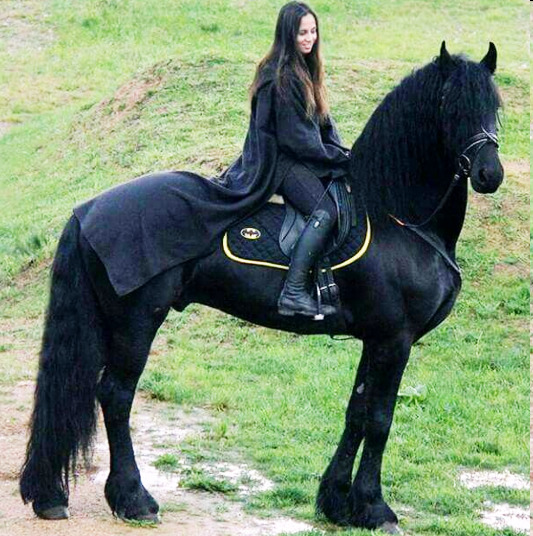
You’ve all seen it in every historical piece of media ever produced. Contrary to popular belief, a big black horse with long legs and long flowing mane is not a widespread or even a particularly old type of horse.
THIS IS NOT A MEDIEVAL THING. THIS IS NOT EVEN A BAROQUE THING. THIS IS A NINETEENTH CENTURY CITY CARRIAGE HORSE.
All the love to fancy Friesian horses, but your Roman general or Medieval country heroine just really couldn’t, wouldn’t, and for the sake of my mental health shouldn’t have ridden one either.
Big warmblood horses are a Western European and British invention that started popping up somewhere around 1700s when agriculture and warfare changed, and when rich folks wanted Bigger Faster Stronger Thinner race horses. The modern warmblood and the big continental draught both had their first real rise to fame in the 1800s when people started driving Fancy Carriages everywhere, and having the Fanciest Carriage started to mean having the Tallest and Thinnest Horses in the town.
Before mechanised weaponry and heavy artillery all horses used to be small and hardy easy-feeders. Kinda like a donkey but easier to steer and with a back that’s not as nasty and straight to sit on.
SOME REAL MEDIEVAL, ROMAN, OTTOMAN, MONGOL, VIKING, GREEK and WHATEVER HISTORICALLY PLAUSIBLE HORSES FOR YOU:
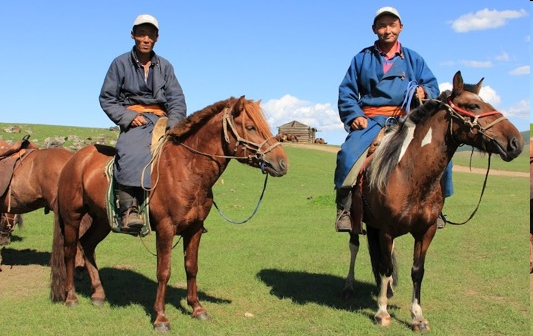
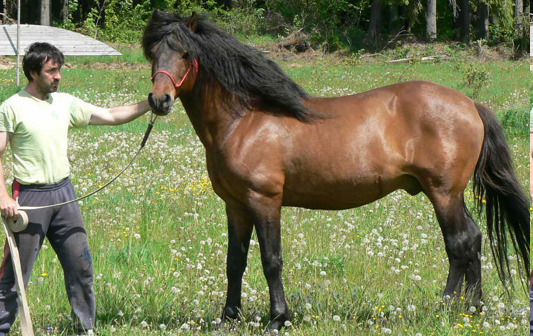
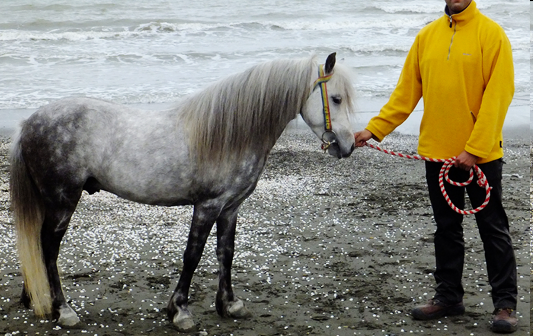
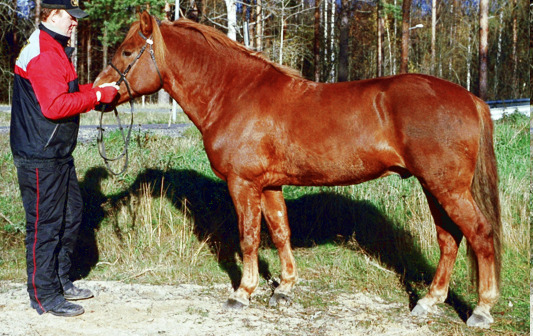
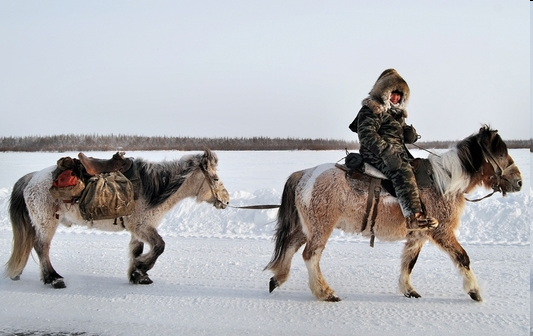
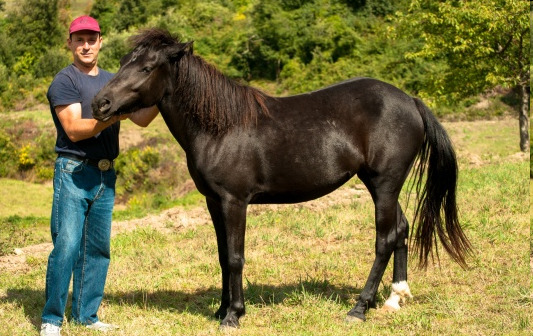
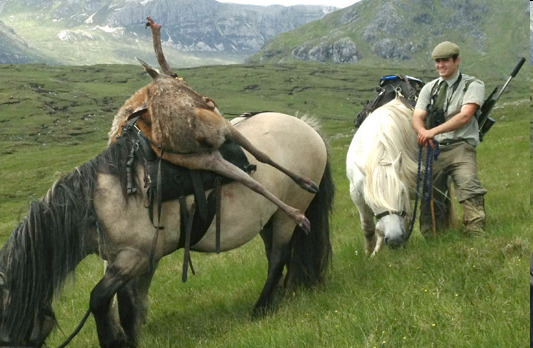
“Primitive”, native breeds all over the globe tend to be only roughly 120-140 cm (12.0 – 13.3 hh) tall at the withers. They all also look a little something like this:
Mongolian native horse (Around 120-130 at the withers, and decendants of the first ever domesticated horses from central Asia. Still virtually unchanged from Chinggis Khan’s cavalry, ancestor to many Chinese, Japanese and Indian horses, and bred for speed racing and surviving outdoors without the help of humans.)
Carpathian native horse / Romanian and Polish Hucul Pony (Around 120-150 at the withers, first mentioned in writing during the 400s as wild mountain ponies, depicted before that in Trajanian Roman sculptures, used by the Austro-Hungarian cavalry in the 19th century)
Middle-Eastern native horse / Caspian Pony (Around 100-130 at the withers, ancestor of the Iranian Asil horse and its decendants, including the famous Arabian and Barb horses, likely been around since Darius I the Great, 5th century BC, and old Persian kings are often depicted riding these midgets)
Baltic Sea native horse / Icelandic, Finnish, Estonian, Gotland and Nordland horses (Around 120-150 at the withers, descendant of Mongolian horses, used by viking traders in 700-900 AD and taken to Iceland. Later used by the Swedish cavalry in the 30 years war and by the Finnish army in the Second World War, nowadays harness racing and draught horses)
Siberian native horse / Yakutian pony (Around 120-140 at the withers, related to Baltic and Mongolian horses and at least as old, as well-adapted to Siberian climate as woolly mammoths once were, the hairiest horse there is, used in draught work and herding)
Mediterranean native horse / Skyros pony, Sardinian Giara, Monterufolino (Around 100-140 at the Withers, used and bred by ancient Greeks for cavalry use, influenced by African and Eastern breeds, further had its own influence on Celtic breeds via Roman Empire, still used by park ranger officers in Italy)
British Isles’ native horse / various “Mountain & Moorland” pony breeds (Around 100-150 at the withers, brought over and mixed by Celts, Romans and Vikings, base for almost every modern sport pony and the deserving main pony of all your British Medieval settings. Some populations still live as feral herds in the British countryside, used as war mounts, draught horses, mine pit ponies, hunting help and race horses)
So hey, now you know!
I love this so much – and now I know why Tall Lanky Thin horses have a terryfying vibe to them, and the “primitive” native pony-like breeds awake in me only hope and trust.
such valid historical finger-eaters here
So what kind of horses carried the occasional metal-encased dude (and probably a handful of other unusually heavy things)?
Also, for that matter, what’s a “palfrey” look like? I’ve never known what to picture for that.
I believe a “palfrey,” or horse for medieval women, was distinguished not by breed or bloodline but by its ability to amble, which is a specific gait. I recall anecdotally (but cannot cite) that the ambling gait was once highly developed in England, although today it’s mostly preserved in Icelandic ponies. So perhaps picturing a small, comfortable pony – light but not delicate, and a bit friendly and tubby-looking? Like a Paso Fino, but not so extreme?
As for medieval European warhorses, the Great Big Horse that carried an armored medieval knight was called a destrier, as distinct from a charger, courser or palfrey. We also know that like the knights of their time, they probably weren’t physically BIG so much as they were STRONG for their size – but that’s where my own knowledge of it ends.
Wikipedia suggests that it is a topic of frequent discussion but no particular consensus? Again, it appears to have been a general description of a type of horse, rather than a breed. I really like this piece of evidence, though:
An analysis of medieval horse armour located in the Royal Armouries indicates the equipment was originally worn by horses of 15 to 16 hands,[7] about the size and build of a modern field hunter or ordinary riding horse
So maybe we could picture something like this Upstanding Trustworthy Citizen??????
I have ridden a Central Asian nomad horse — a Kyrgyz horse, too small to have much Novokirgiz breeding, I think. (The Novokirgiz horse is the result of a Soviet breeding program.) Riding in the US, I was always taught certain things about how large a horse had to be to carry a certain weight of rider, and since I am not thin, I was a bit nervous about riding a horse that size.
They threw us (everyone except me & one other person were complete, never-been-on-a-horse-before novices) up on stallions (! something else that wouldn’t ever happen in the US) and turned us loose on the high pasture on the shores of Song Kul. I have never in my life been on a stronger horse. He was amazing to ride. I’m sure his ancestors carried folks into battle with all kinds of gear with no more trouble than he carried me.
“Big Horses are a Very New Thing and they Likely Didn’t Exist in your Historical and/or Fantasy Settings.”
Beg to differ.
In a Historical setting I’m right behind getting the research as right as possible, then deciding what to put in and what to leave out so that Showing My Work enhances the story, not slows it down.
However in a Fantasy setting Big Horses exist if I want them to. In fantasy, dragons exist. And demons. And wizards. And dwarves. And trolls. And etcetera, compared to which the existence of Big Horses is a small quibble, especially if Improbably Big Horses can add something to a character or a culture.
A warrior race who think Size of Horse and a Big Spear means Everything is going to get a nasty surprise when they encounter a warrior race for whom Nimbleness of Horse and Lots of Arrows means everything: in the real world, that’s Western Chivalry vs the Mongol Horde.
It can also be humorous: a character seen as wealthy by his own people for having One Really Big Horse is going to seem poverty-stricken to a people where
the sign of wealth
is Lots Of Smallish Horses: quantity, not quality – except that our discommoded character then finds they have different but equally good qualities of their own, such as the ability to thrive with grazing on which his own horse can barely survive…
I’ve known about the horse-size thing for a long time – credit once
again goes to Ewart Oakeshott’s children’s / YA series “A
Knight and his Armour / Weapons / Horse / Castle / In Battle” series. They’re ighly recommended: some of the information is a bit superseded, but most remains more accurate and is presented more sensibly than anything you’ll see on the History Channel.
Writer note: some other horse “types” were the palfrey (mentioned above), the rouncey, the hackney and the jennet (there are others); all are mostly general-purpose riding horses with an ”easy ambling gait” and various levels of breeding, though the jennet was also a light-cavalry war horse in Spain, where it was the gineta.
Medieval war-horses weren’t, and didn’t have to be, massive Clydesdales
or Shires or Suffolk Punches because the armoured men they carried didn’t weigh what pop-history believed – and too often still believes –
they did.
“As important and essential as the medieval horse was to knighthood, the
question remains: what kind of horse was it?
The popular idea is of a great ponderous cart-horse, standing about
seventeen hands, onto which the armoured warrior had to be hoisted with a
crane. This notion is utterly wrong; the crane business was invented by a
modern theatrical producer as a
funny gag.”
”Modern” just means “not medieval” – the play was, IIRC, a comedy farce called “When Knights Were Bold” and,
depending on the source
consulted,
was staged in either the 1870s or 1900s. Either way, the crane was as historically correct as Monty Python Holy Grail coconut-shells.
“No, the medieval war-horse was a good strong working horse, like the old bus
horses that few people remember now. The nearest thing to the medieval horse
these days is perhaps the heavy hunter or large show-jumping horse: in Poland
not too long ago,
middleweight horses exactly the right type for a medieval knight were still in
use.”
He was writing in the 1960s; “not too long ago” means the 1940s-50s.
According to Oakeshott, the “proper” war horse was the courser, a heavy hunter conformation combining strength with nimbleness on the battlefield, but not as expensive as a tournament-trained destrier because of potential wastage. Even so, money was often spent on protecting coursers and, as mentioned above, since steel plate doesn’t stretch it’s easy to estimate the size of the armour’s wearer whether man or beast.
Here’s the Wallace Collection’s display showing relative proportions; this one’s especially useful since, AFAIK, it’s the only one anywhere with provenance that both armours were made at the same time in the same style by the same workshop for the same person, Freiherr Pancraz von Freyburg.
That’s not a Clydesdale or Shire, but it’s got to be a well-built horse; for reference, the horse armour weighs 66lb / 29kg, the rider’s armour weighs 56lb / 25kg and I’ve a memory of reading somewhere that, based on his armour, Von Freyburg himself would probably have weighed about ten stone, that’s 140lb / 63kg. So before adding the saddle and other tack whose weight I don’t know,
the horse is already carrying 262lb / 117kg into battle.
Here’s Albrecht Dürer’s famous “Knight” – again, not mounted on a cart-horse, but not on a pony either.
The destrier started as a “better” (more highly bred, more impressive-looking, more everything…) war horse, but by the end of the Age of Armour it was mostly a sports mount trained to run in a straight line without shying from an apparent impending collision, with a quirk that (again, depending on what source you read) gave its name.
”Dexter” means “right”, and the destrier’s gait involved training it to lead with whatever foreleg (right? left? modern dressage would know) produced a “break right” reflex. Jousting mostly took place left-side to left-side, so turning right was always turning away from trouble; this would also be a useful trait in battle.
However there was a daft German form of jousting called Scharfrennen which was right-side to right-side; to make sure the horses didn’t shy, they wore chanfrons (head-armour) or cloth caparisons without eyeholes and ran blind…
IMO the later “sports” destrier would have been bigger, certainly stronger, than
either the courser or its own earlier forms: this was because jousting kit was getting more specialised
and considerably heavier than battle armour.
Late-form tournament armour was never used on the battlefield: it was useless for any other purpose, and in the most extreme forms its wearer’s arms could only move into the jousting position of holding lance and reins but not do anything else…
…while in other styles like the Gestech, the helm gave just enough visibility when leaning forward to charge with a lance at someone wearing the same kit; then in the instant before impact both would straighten up so the incoming point wouldn’t find an opening. But since the helm was fixed to the breastplate, its wearer couldn’t look to either side without turning his entire body.
These late jousting armours, heavy, inflexible and single-purpose, are the only reason I give any credence whatsoever to the old “everybody knows…” received wisdom that a man in armour couldn’t mount his horse again or even get up unaided.
Think about it: leaving aside the actual weight of the stuff, If you couldn’t move your arms except 45° up and down from the elbow, and your body was completely rigid from head to hips, you’d have trouble getting up off the flat of your back even in jeans and a tee-shirt.
Not very good for close combat. The people running, jumping, climbing, rolling etc. in full armour in videos are all wearing “field harness” i.e. battle armour, meant to combine protection with mobility and, after centuries of development, doing it very well.
A common loser’s penalty in a tourney was to forfeit “horse and harness”, harness meaning armour, not saddle and bridle.
The value of a well-trained mount, along with the owner’s familiarity with its little equine quirks and maybe even a bit of affection, combined with the cost in money and time of replacing
armour, usually made it cheaper to ransom them from the winner. Top-quality plate in particular was made to measure in places like Milan or Nuremberg which might be far away, while the armour that already fitted properly was piled up just over there, so hey-ho, where’s my wallet…?
Some knights such as William Marshal, before he got into politics, were professional jousters who followed the tournament circuit round England and France, making a reputation and quite a profit from winning other knights’ kit then selling it back to the owners…
At the other end of the horse-size scale, the character Rollo in “Vikings” was known in the sagas as Göngu-Hrólfr, Rolf the Ganger (Walker). Wikipedia claims this is because he was too heavy to ride a horse. I’ve seen other suggestions that it’s because he was too tall or long-legged for the small Icelandic breed, which he’d have been forced to ride either knees-up like a jockey or with feet dangling almost to the ground.
Maybe he should have invented (cough) Rollo-skates… ;->
After spending a week with the 6.25“x10” Monoprice, my Yiynova and Cintiq remain unplugged and I gave my Intuos away to a friend. The Monoprice tracks subtle pressure variances and small movements with less lag and more crisp fidelity than any of the others. It is, put crudely, fucking awesome, in both OSX Lion and Windows 7 x64.
I have one of these, 10×6.5 I bought about two months ago for 48 bucks. It’s a billion times better than my old Wacom Bamboo and works like a fuckin dream.
ATTENTION ALL PENNY-PINCHING ART FRIENDS!!!
ooo reblogging this for potential future purchase
oh
I’m definitely thinking of getting one of these, or asking for one for Christmas. ‘Cause as much as I appreciate Ian giving me his old tablet, I think the pen might be on it’s last legs. ;~;
Oh my god these start at $25 for a little one.
I would be so okay with a little one.
Reblogging this again because I fucking lost it and don’t want to forget it again.
So, pretty frequently writers screw up when they write about injuries. People are clonked over the head, pass out for hours, and wake up with just a headache… Eragon breaks his wrist and it’s just fine within days… Wounds heal with nary a scar, ever…
I’m aiming to fix that.
Here are over 100 links covering just about every facet of traumatic injuries (physical, psychological, long-term), focusing mainly on burns, concussions, fractures, and lacerations. Now you can beat up your characters properly!
Wound assessment: A huge amount of information, including what the color of the flesh indicates, different kinds of things that ooze from a wound, and so much more.
Location pain chart: Originally intended for tattoo pain, but pretty accurate for cuts
General note: Deeper=more serious. Elevate wounded limb so that gravity draws blood towards heart. Scalp wounds also bleed a lot but tend to be superficial. If it’s dirty, risk infection. If it hits the digestive system and you don’t die immediately, infection’ll probably kill you. Don’t forget the possibility of tetanus! If a wound is positioned such that movement would cause the wound to gape open (i.e. horizontally across the knee) it’s harder to keep it closed and may take longer for it to heal.
General notes: If it’s a compound fracture (bone poking through) good luck fixing it on your own. If the bone is in multiple pieces, surgery is necessary to fix it–probably can’t reduce (“set”) it from the outside. Older people heal more slowly. It’s possible for bones to “heal” crooked and cause long-term problems and joint pain. Consider damage to nearby nerves, muscle, and blood vessels.
General notes: If you pass out, even for a few seconds, it’s serious. If you have multiple concussions over a lifetime, they will be progressively more serious. Symptoms can linger for a long time.
Dislocations: Symptoms 1, 2; treatment. General notes: Repeated dislocations of same joint may lead to permanent tissue damage and may cause or be symptomatic of weakened ligaments. Docs recommend against trying to reduce (put back) dislocated joint on your own, though information about how to do it is easily found online.
Why do my interests in canning, couponing, and homesteading overlap so often with blogs with titles like ‘The Obedient Housewife’?
Like, I’m like, “I want to learn to make soap and farm,” and suddenly I see 500 “traditional family” motherfuckers like no you are mistaken. I am just a simple lesbian anticapitalist looking to limit my consumerism as much as possible.
‘these fun crafts will keep your kids occupied until your husband gets home!’ no i want a clothespin crown for me
As a nerd who homesteads, let me share the data I have gathered!
First is my megalist of homesteading-related links I’ve gathered over the years. I’m a mod over at r/homesteading and this is where I’ve put a lot of good sources (not all, admittedly some are still sitting in my bookmark folder waiting to be added). The search function at reddit is wretched, but there’s also been lots of good things I’ve shared there too. Please note that many of these sources are not actual webpages, but PDFs. That’s not an accident, PDFs are where you find the really good in-depth stuff.
Many of my sources are from the Extension Service. They won’t try to relate to you based on your lifestyle or sexual identity or religion or whatever, but due to that, they also won’t be alienating you either.
The Cooperative Extension Service (US only) exists in all 50 states and in most counties. It is taxpayer funded. The Extension Service exists to help people become more self sufficient, for farmers to be more successful, for people to be healthier, for kids to be well adjusted, to figure out how to grow the best plants in your area, etc. Some county offices even offer cheap classes in things like gardening, canning, soap making, and they’re taught by people with training in these areas (I once heard a great talk on composting from a soil scientist that way). Do you want to know what type of plant something is? Do you need help figuring out a plant disease or pest issue? You can now contact them online and get great info.
I HIGHLY recommend checking out your state’s extension service website, because they do offer different types of information, depending on what is grown/raised where you are (and how well funded they are). My county extension puts out a monthly gardening newsletter, which includes a helpful ‘this is the time of the year to do —-’ part.
Here’s an example from New York – they have a calendar at the bottom, showing how they have things like hydroponic and urban agriculture workshops coming up.
Interested in raising animals? Penn State Extension is really really good. They have tons of free materials and courses available online, some I pulled for my megalist at the top of this.
National Center for Home Food Preservation – they cover the important aspects of food safety, and also have some recipes. Many state Extension Service websites will have lots more recipes.
If you have kids, check out4-H programs for them. It’s part of the local public school system here. If you’re homeschooling, you can also purchase their science-filled educational and self sufficiency materials (materials are divided by age ranges – Cloverbud Member: ages 5-8, Junior Member: ages 9-13, Senior Member: ages 14-19). One of my coworkers is in 4-H, she’s still in high school, and last year she raised an award-winning heifer.
Congress grants the money for funding these programs, and they’re connected with various universities. There’s a level of cutting edge scientific knowledge and academic rigor you don’t find in blogs or even most books. There’s LOTS of homesteading books filled with outdated information like ‘till the earth every year’ hell I still have older coworkers who do it and I’m trying to figure out how to gently tell them that they’re destroying their soil that way, and that there’s better methods now, methods grounded in science.
Look, most fantasy has settled on a default setting of a quasi medieval europe-like Fantasy Land, and while it has some serious inherent flaws, like whitewashing and overused bigotry and misogyny for the sake of “Historical Accuracy”.
But my biggest problem with it is that its just Bland. Most of the places feel the same, with just different coats of paint and new names, there is rarely any interesting thoughts put into how the world works, since its just assumed to be the default. And i think its just a terrible shame because medieval Europe is such a vibrant and endlessly interesting setting.
Here I have a map of Europe in 1130 AD, just to pick a snapshot (X):
Can you see how much is going on here? A lot, which is good for us, bc it means more to steal from. But allow me to explain what you are looking at.
Going left to right, top to bottom:
In Scandinavia and Northern Britain we have the former viking nations now slowly transitioning into more settled societies, as well as being converted from pagan to Christian.
In Ireland we have the many tiny petty kingdoms feuding for control, while paying lip-service to:
England which had all too recently been overtaken by the Normans, who installed their new french Aristocracy
France is a mess so decentralized there isn’t any clear line for who is even part of the country, with the King of England paying fealty as he is also the duke of Normandy, and Brittany (the brown thumb sticking out) being its own little Celtic thing, doing the same lip-service as the Irish do to England
Next to France we have the bigger brother The Holy Roman Empire (HRE) originally the German part of the Frankish Empire, until the empire was split between the emperors three sons, quickly after which the middle brother was attacked from both sides got split up and fought over ever since. The HRE is a mess so complicated im gonna do a whole other post about it, but its pretty much about 300 countries squeezed into one giant one.
Then in the reds we have the first unified and christian state of Poland, which would quickly be divided among the sons again. The country is both in conflict with the neighboring Germans as well as:
Old Prussians and Baltics, pagan tribes who both in-fight and get frequently invaded by the next door Christians, the last remainder of the Romuva
Then in the greens, we have the river-trading Kievan Rus, who always remind me so much of Rohan, only with riverboats instead of horses. They were city states that worked the plains around then and traded with the Romans in the south and the Germans and Scandinavians in the west. They were is frequent conflict with:
The Steppe Hordes (in brown and yellow), who spread out over the vast flat grassy steppes that go from Hungary to Korea, mastering the art of horseriding and archery and being able to move around faster on land than anyone else on the globes for many centuries. Mostly they were nomadic and pastoral, living off their horses, they would also frequently raid their wealthy settled neighbors, for the plunder and tribute.
Speaking of Hungary (in orange), in the northern Balkans, surrounded at all sides by hills and mountains is the large fertile valley, which is home to to the Magyars, a former steppe horde, that invaded and conquered the valley and settled, slowly turning into the large kingdom of Hungary.
Jumping west to present day Spain, we have the Iberian Peninsula, which was for a long time ruled by the Caliphate of Cordoba, conquering all the way up into France. Slowly however, there has been a pushback, as the new militarized kingdoms of Portugal, Castille, Navarra and Aragon are working their way south over the course of many centuries.
In Italy, aside from the HRE,
We have the Merchant Republics of Genoa, Pisa, Amalfi and Venice, who fought over trade in the Mediterranean, with the Holy lands and especially rights to the lucrative trade with the Muslim Caliphates, who had access to both the Silk Road and the Spice Trade.
Then we also have the Pope, who apart from being the head of all the Entire Catholic Church, was also the king of his own realm, the Papal State.
At last in the south we have Sicily, which was a Norman and French controlled kingdom, which had been conquered in a crusade from the Emirate of Sicily.
In Greece and Anatolia (in purple), we have the remnant of the Roman Empire, the Byzantines, although they at no point stopped thinking or referring to themselves as Romans. Here a remnant of late antiquity remains, ever trying to regain its old glory. Rejecting the Pope, they hold to the old Orthodox ways of the Patriarchy and spread their influence out in competition with the Catholic West, as well as the Muslim East.
The Caucasus is a long strip of land between two seas with a bigass mountain-chain going across the middle, and making it very hard to cross. The locals very much like to keep it this way: Here in a valley up against the mountains, we have the Kingdom of Georgia, a land of wineyards and fiercely defensive warriors, holding off both the much larger Caliphates to the south and the other mountain tribes to the north.
Going back to the west we have the coast of North Africa, where we numerous smaller states either under control of Cordoba in Spain or the Fatimid Caliphate in Egypt. Here they live on the livable strip of land between the sea and the desert, sailing north to raid the christian lands to the north.
From here there is the great trek, trading caravans crossing the Sahara south to goldmines of the Mali Empire, home of the richest man in the human history, King Mansa Musa, whose wealth would have been immeasurable by any standard we have today, whose Hajj to Mecca was so splendid and charitable that it crashed the global gold market for a decade. A largely isolated kingdom, it flourishes from the bountiful caravan trade.
Along the coast of the easternmost Mediterranean, we have the newly formed Crusader States, formed in the first crusade, where the squabbling crusade leaders competed and carved up their winnings into their own small kingdoms. Here is a mix of locals, pilgrims, holy orders and Italian merchants all trying to carve out a success.
Further in we have the Abbasid Caliphate, enjoying the prosperous times of the Late Islamic Golden age, with bountiful harvest, the spice trade and silk road, and a unrivaled creation of knowledge in the Baghdad House of Wisdom, one of the largest universities and libraries in the world. To parallel the Christian holy orders, we also have the shia Hashashin Order, who come down from their mountain fortresses to assassinate those they see as a threat.
This is just a very quick overview, and most of these would change over the course of a century. This is mostly to show how there has never been a Fantasyland-esque static world of same-ish kingdoms, that is a simplification made because there is no way to get anywhere near the complexity of the real world when we are making a work of fiction. That way leads to an encyclopedia.
So we make shadow-puppets, abstractions, we use shorthand and likenesses to well-known history to not have to explain what a king is every time. But the problem arises when it becomes a copy of a copy, an abstraction made from other abstractions. This can make the world bland and makes it difficult to then add back the interesting details. That’s why i think its way better to steal inspiration from the source, before many of the good stuff has been filtered away.
In general Things Have Always Been Messier and More Interesting Than You Think:


 wrennette