Schur loved not only the central thesis of “What We Owe to Each Other” but also the book’s title. “It assumes
that we owe things to each other,” he told me. “It starts from that
place. It’s not like: Do we owe anything to each other? It’s like: Given
that we owe things to each other, let’s try to figure out what they
are. It’s a very quietly subversive idea.”
It is, in a way, deeply un-American — an
affront to our central mythology of individual rights, self-interest and
the sanctity of the free market. As an over-the-top avatar of all our
worst impulses, Eleanor is severely allergic to any notion of community.
And yet her salvation will turn out to depend on the people around her,
all of whom will in turn depend on her. What makes us good, Chidi tells
her, is “our bonds to other people and our innate desire to treat them
with dignity.”
The Nefertiti Bust is a painted stucco-coated limestone bust of Nefertiti, the Great Royal Wife of the Egyptian Pharaoh Akhenaten. The work is believed to have been crafted in 1345 B.C. by the sculptor Thutmose, because it was found in his workshop in Amarna. It is one of the most copied works of ancient Egypt.
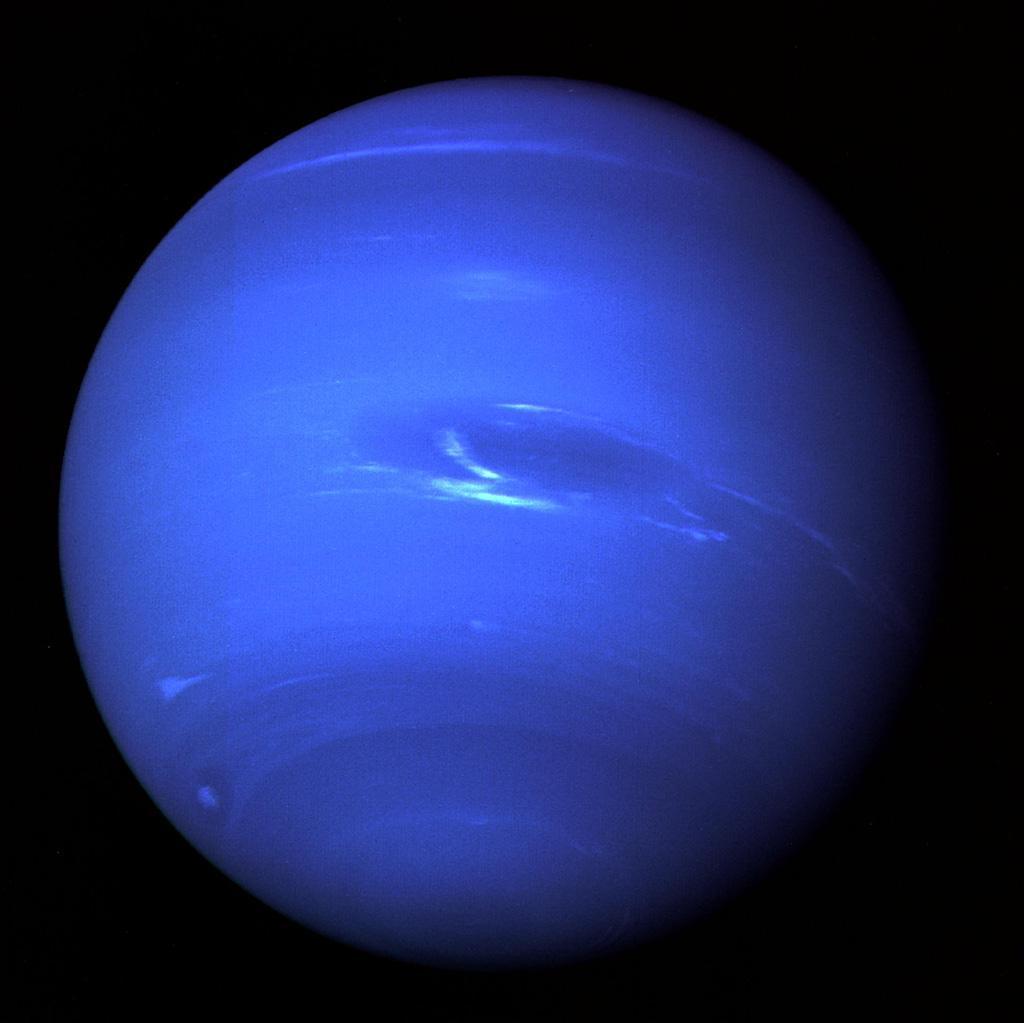
This picture of Neptune was produced from the last whole planet images taken through the green and orange filters on NASA’s Voyager 2 narrow angle camera. The images were taken at a range of 4.4 million miles from the planet, 4 days and 20 hours before closest approach.
During August 16 and 17, 1989, the Voyager 2 narrow-angle camera was used to photograph Neptune almost continuously, recording approximately two and one-half rotations of the planet.
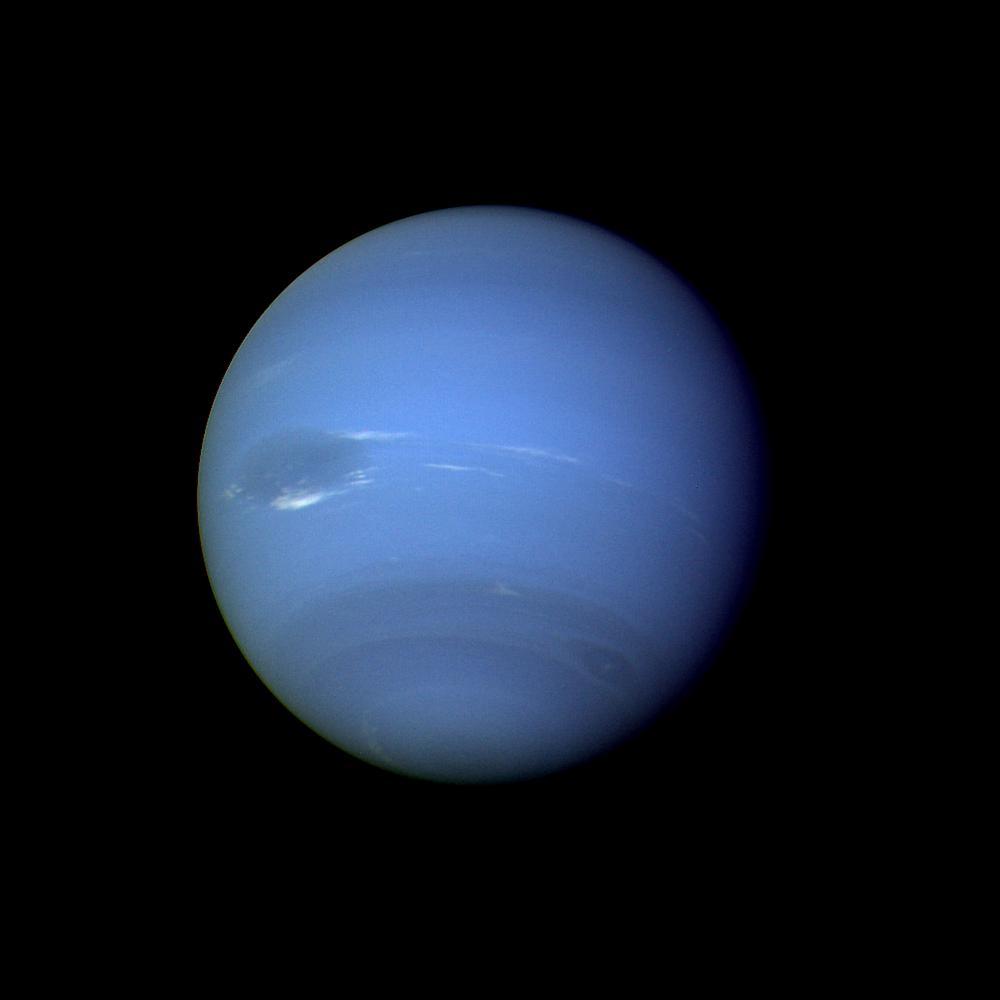
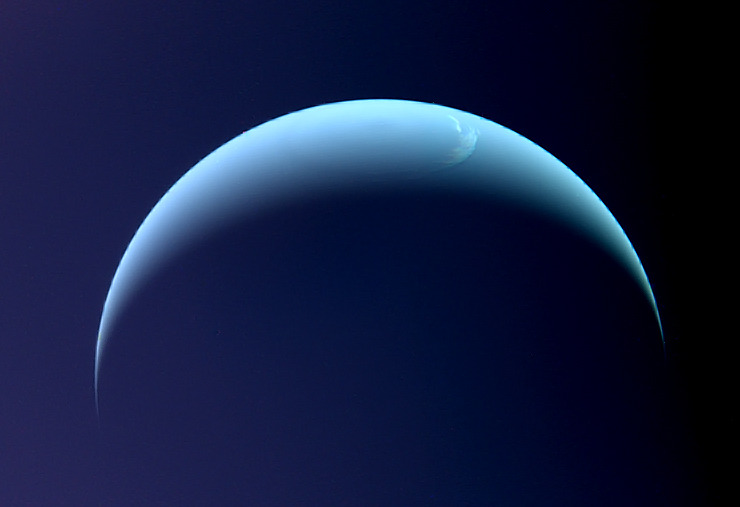
Assembled using orange, green, and blue filtered images taken by Voyager 2 on August 24 1989.
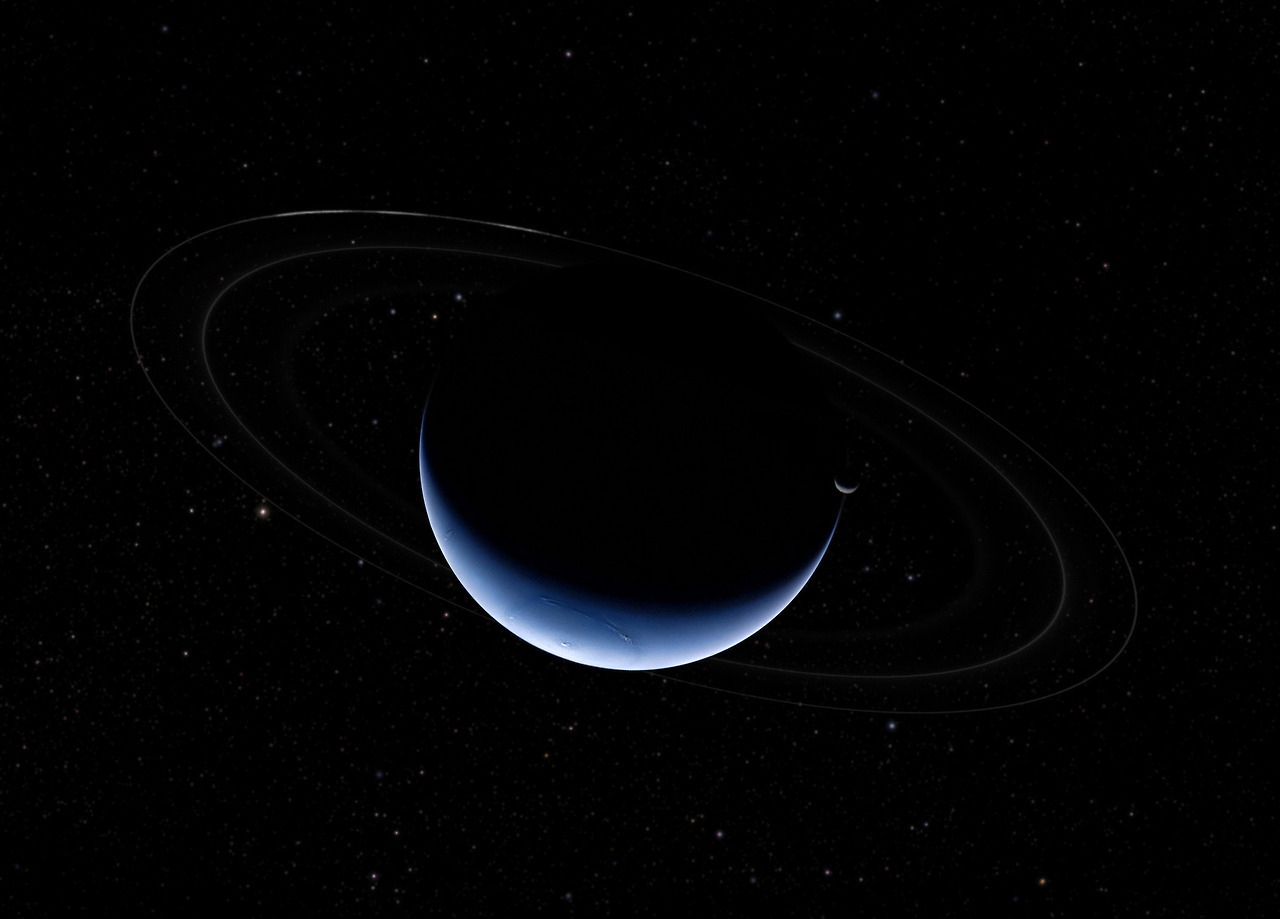
Based on the images recorded during its close encounter and in the following days, this inspired composited scene covers the dim outer planet, largest moon Triton, and faint system of rings.
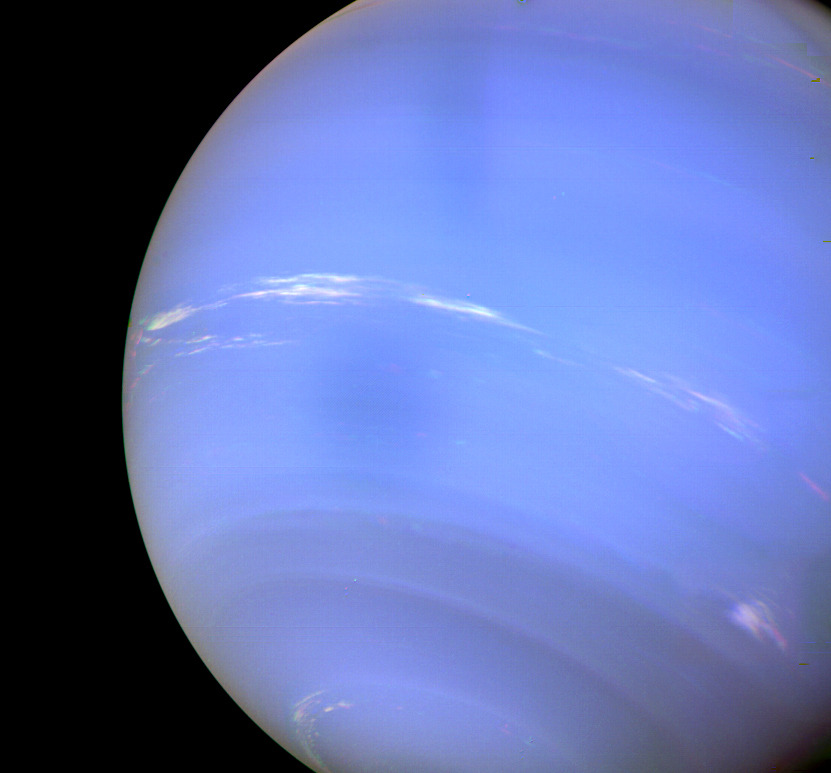
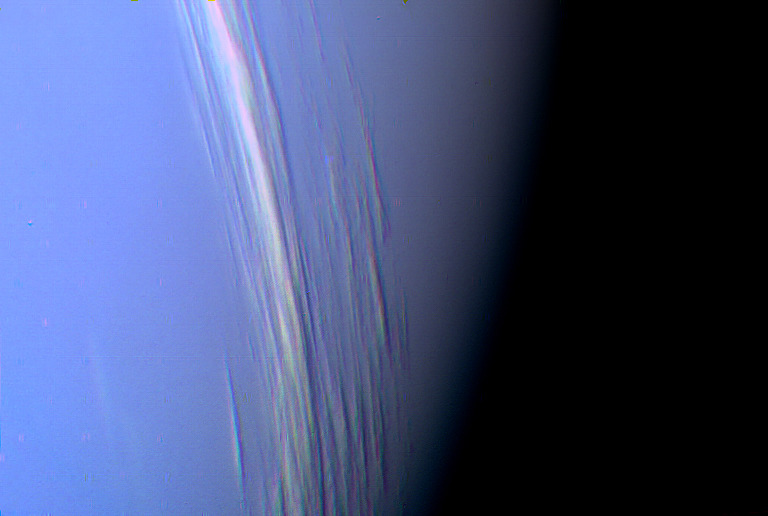
NASA’s Voyager 2 high resolution color image, taken 2 hours before closest approach, provides obvious evidence of vertical relief in Neptune’s bright cloud streaks. These clouds were observed at a latitude of 29 degrees north near Neptune’s east terminator.
Assembled using orange, green, and blue filtered images taken by Voyager 2 on August 31 1989.
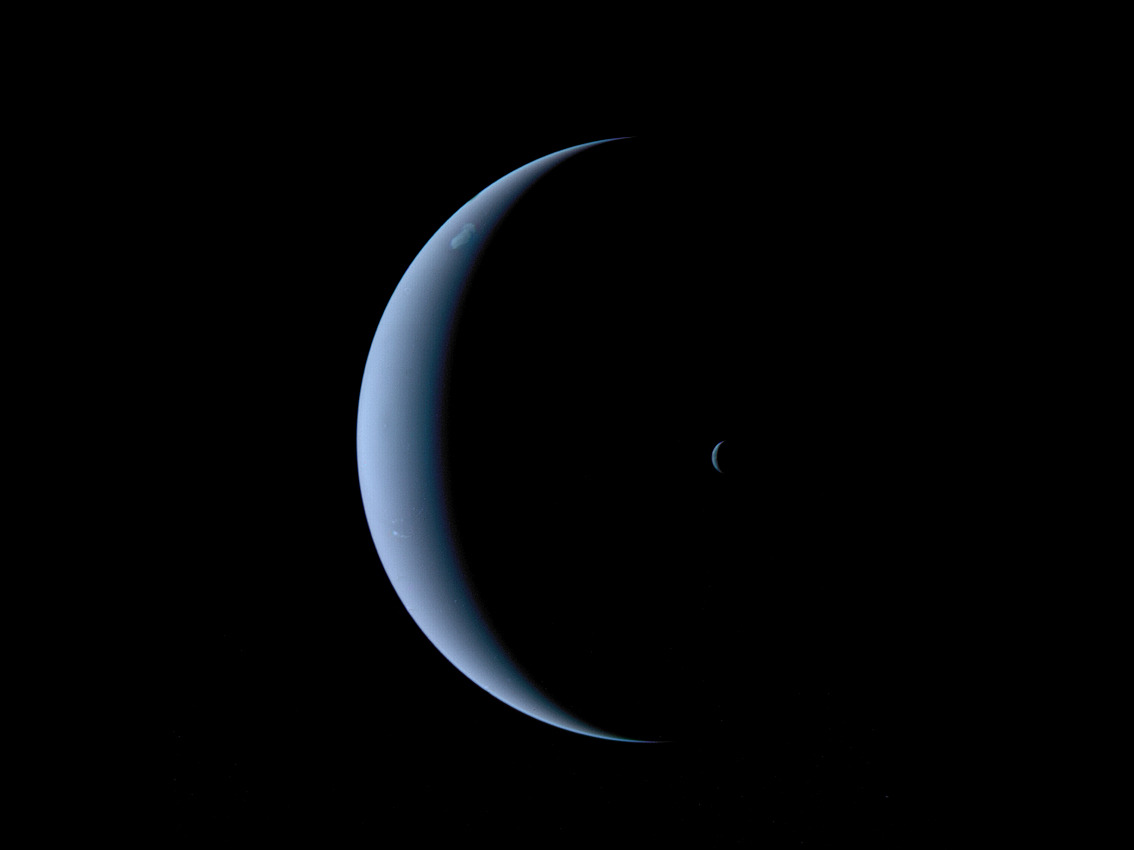
Neptune and triton captured by Voyager 2 on their way out of the solar system in August 1989.
Neptune and triton captured by Voyager 2 on their way out of the solar system in August 1989.
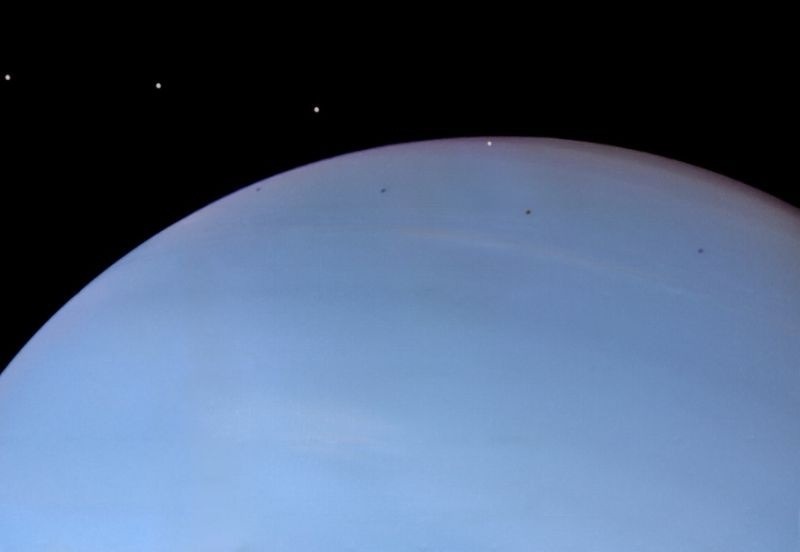
This view of Despina eclipsing and transiting Neptune is composed of four frames captured nine minutes apart on August 24, 1989 from 20:00 to 20:27 through blue, orange, violet, and green filters. In this version, Despina has been brighted substantially to make it easier to spot.
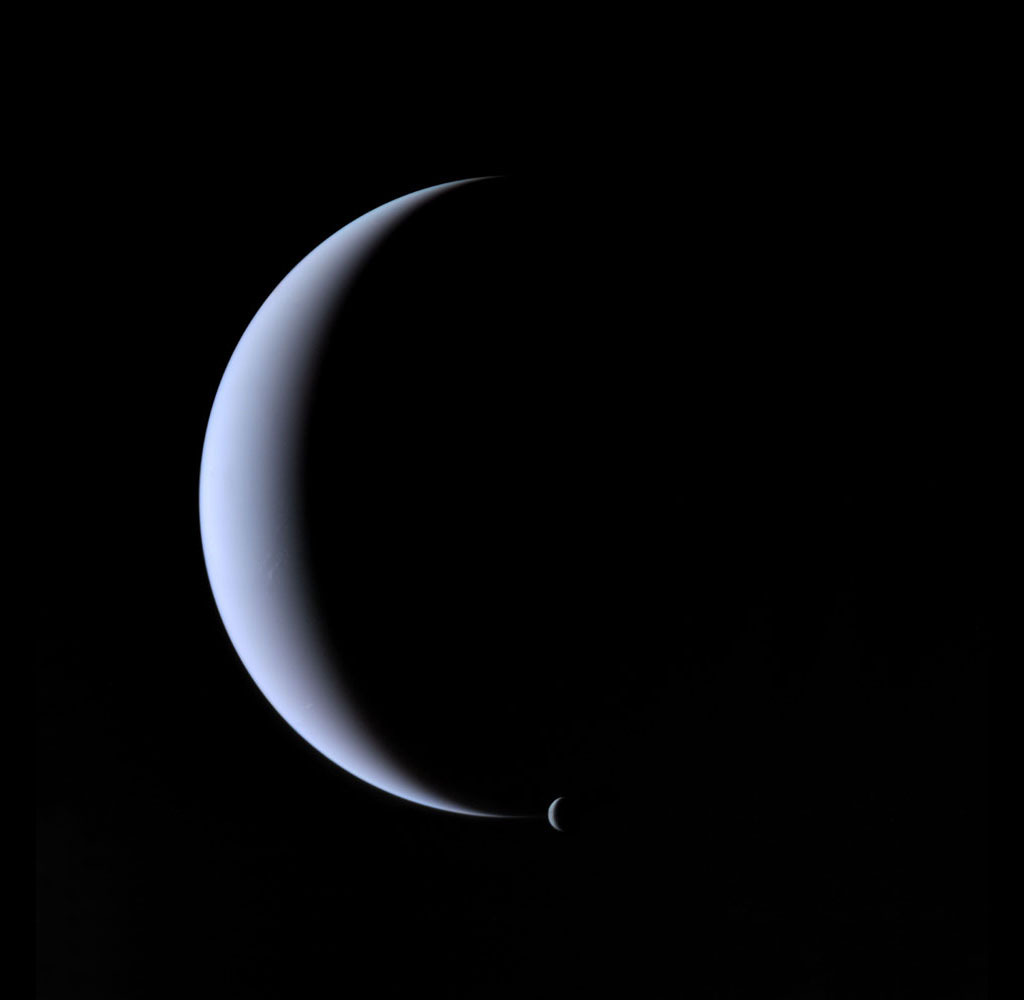
This crescent view of the outermost planet and its moon is one of the last images recorded by Voyager 2’s cameras as it sped onwards to interstellar space, having surveyed most of the outer Solar System.
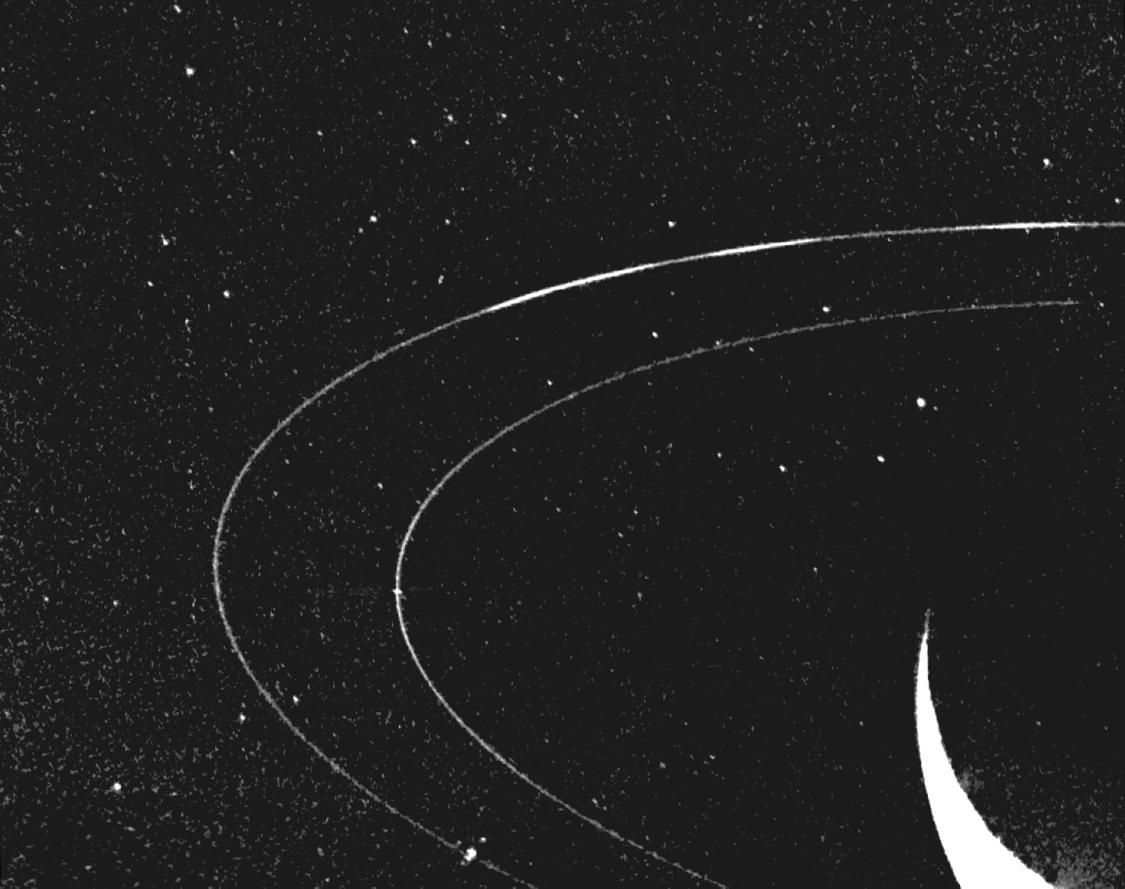
Arcs in the Adams ring (left to right: Fraternité, Égalité, Liberté), plus the Le Verrier ring on the inside






 wrennette